
What Dietitians Want All Families to Know About Grocery Shopping
Grocery shopping with a growing family can feel like a balancing act — rising prices, different tastes, and the constant question of what’s actually healthy. Dietitians use a few simple strategies to keep trips affordable, efficient, and nourishing. Here are my go-to tips that make a real difference.
1. Always Shop With a List
A list saves time, money, and arguments.
If my kids come along, I turn shopping into a game: my oldest gets “missions” to collect items she knows well, like cereal or our usual bread.
Sticking to the list also makes it easier to say, “Not today — it’s not on the list.”
2. Start With Colourful Fruit and Veg
When you walk into the fresh section, look for the most colourful, seasonal produce.
Choose the cheaper option per kilo, but also think about how much you’ll actually use. For example:
Tomatoes → almost 100% edibleCorn → a chunk is discarded
Sometimes the “more expensive” choice ends up cheaper once you factor in waste.3. Swap Fruit for Veg (Kids Usually Need It!)
Most kids get enough fruit — but 95% of Australian children don’t eat enough vegetables.
Veggies can be just as convenient (and often cheaper) for snacks. Try:
Grated carrotHalf a cucumberCherry tomatoesCapsicum stripsA whole tomato instead of an apple
Small swaps = big wins.4. Visit the Frozen Aisle Early
After the fresh section, head straight to frozen veg. They’re nutritious, budget-friendly, and picked at peak freshness before being snap-frozen.
Then collect refrigerated items like milk and yoghurt, leaving the middle aisles for last. These aisles usually contain the highly processed snacks — and by then, your trolley is full and you’re less tempted.
If you’re worried about cold items warming up, bring an insulated bag with an ice pack and keep them in there as you shop.5. Read Labels for Processed Foods
You don’t need to label-read everything — whole foods like fresh produce, nuts, plain milk and plain yoghurt are already good choices.Label reading is most useful for items like:Breakfast cerealsBreadYoghurtKids’ snacks
It takes practice, so try your first few sessions without the kids. Soon, you’ll know your best picks and won’t need to keep checking.How to Read a Food Label (The Simple Version)
1. Ingredients List
Found on the back of the pack, listed from largest amount to smallest.Look for:Sugars, fats, or salts in the first few ingredients → often a less healthy choiceLong ingredient lists or unrecognisable items → likely ultra-processed
2. Nutrition Information Panel
When comparing two products, always use the “per 100g” column.Choose options with:Lower sodiumLower saturated fatLower sugarHigher fibre
This gives the clearest snapshot of overall healthiness.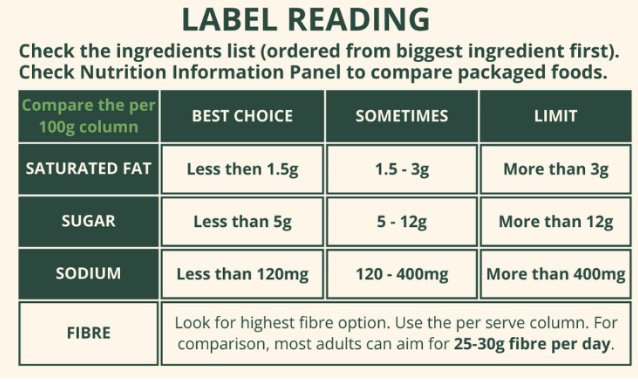
3. Front of Pack
Front-of-pack labels are marketing tools. Words like:“Wholesome”“Natural”“No nasties”“Made from fruit”
…sound good but aren’t regulated and don’t tell you much about nutrition. Always flip the packet over for the real information.Final Thoughts
Healthy grocery shopping doesn’t have to be complicated — a list, a plan, and a few simple label-reading skills make all the difference. Small habits add up, and your future self (and your food budget!) will thank you.