
Lunchbox reflections (and tips)
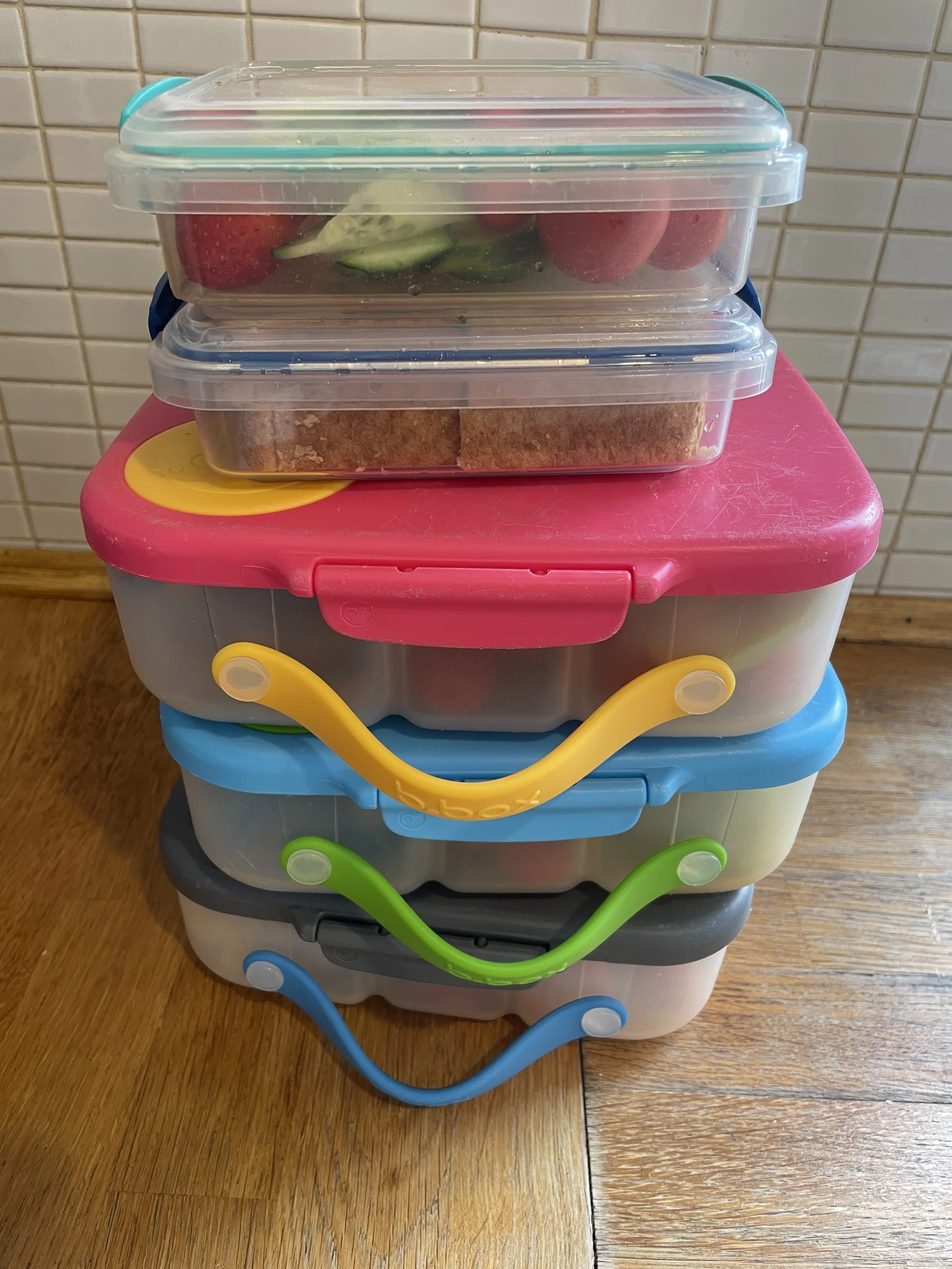
I’ve just finished my first school term of making 13 lunch boxes a week for 3 kids. It’s my 4th year of lunchbox prep but really stepped up in number this year.
Although, as a dietitian, I’ve been writing lunchbox tips and working with parents around feeding children for almost 2 decades, doing it myself day after day brings the challenges home.
Parents at school raise the challenges again and again when they find out I’m a dietitian and their first question is almost always ‘what do you put in your kids lunchboxes?’ !I’ve been thinking about how I do it and realised I do have some guidelines I follow for myself to make sure the food provided is safe (for being out the of the fridge all day), contains enough nutrition to support my kids learning and includes some foods my kids love to eat.
So for all the parents getting on with the daily cycle of make - empty - wash - repeat lunchboxes here are a few reflections on what has worked for me:
A small frozen water bottle in a cooler bag or in the lunchbox is the best cooler of all the options I’ve tried.
Brain break / crunch and sip is always veggies in a separate container. Many primary schools only allow fruit or veggies for the 10am snack and deciding to make it always veg helps kids get an extra serve. At the end of the shopping week I’m often running out of fresh veg and sometimes include canned beans, chickpeas, ¼ avocado or frozen veg instead.
I choose a pattern and use it every day to reduce the mental planning. It’s not the exact same lunchbox everyday but one thing from each food group varying according to what food is in the fridge. Main (sandwich or leftovers), veggies, fruit, dairy (yoghurt or cheese) or other protein food (chopped chicken, tuna, egg), + one other snack (crackers, muffin, Pikelets, seeds, extra sandwich).
Cheap filling foods I regularly use include mixed oats and yoghurt (55c), an extra sandwich with cheese (65c), apple (95c), boiled egg (55c). Adding a couple of berries or cherry tomatoes gives some colour (and added nutrients).*I don’t put packets of food in even if I use single packaged foods sometimes as seeing the branding at eating time normalises that as lunchbox food. The snacks-food industry has positioned itself as the solution to lunchboxes, but unfortunately most of the items promoted are ultra processed and often sugary while they may not fill children up (small portions of starchy foods). Despite all the labelling as ‘lunchbox’ friendly and supermarket sales promoting lunchbox snacks serving from a larger pack saves money and plastic waste while batch making simple snacks and freezing is even cheaper.
Check the allergen restrictions and consider what alternatives you can include. One of my children has very broad restrictions on her lunchbox but I don’t want to fill it with starchy foods and fruit so I have worked out some alternatives to rotate between. We often put in a little container of mixed seeds or tuna + mayo. Other options are ¼ avocado in the skin with a little oil and salt and a spoon. Dairy is discouraged so we sometimes make chia pudding with soy milk. Avoiding all the different allergens across 3 kids different class rules is what I find the biggest mental hurdle in lunchbox making but the pattern I described above has really helped me with this.
Get the kids involved in making the food to increase their interest in eating it. Starting this young while they are keen pays off in the long run (with some time and mess investment at the start). I usually get my kids chopping, spreading and packing the night before as the morning is too busy. They sometimes cook snacks which are frozen for later use. They also portion out the yoghurt and oats into little tubs.
Try any of these tips and tricks suit you and add to your own rhythm, after all each child is different and so every family will have a different set of ‘what works for us’.
*Prices are April 2026